Innovation for Learning

Technology, data, and methodology applied to make the student journey more personalized, consistent, and effective. At Inspira, innovation means using pedagogical intelligence to monitor learning with precision, support decision-making, and amplify results at every stage of education.

Data, methodology, and technology at the service of smarter learning.

ACADEMIC MENTORING WITH DATA ANALYTICS

We track every student's journey, from Elementary School through High School, with analyses by subject, skill, and competency.

Using proprietary assessments and pedagogical indicators, we identify patterns, gaps, and learning needs to structure tailored study pathways. Monitoring includes targeted plans, strategic exercises, mentoring sessions, and guidance on organization and academic decision-making.
Personalized learning pathways

Monitoring by subject, skill, and competency

Digital platforms with student history and progress

Structured preparation for ENEM and university entrance exams

MATHEMATICAL LITERACY WITH INNOVAMAT

In the early years, we strengthen the foundation of mathematical learning through active inquiry, conceptual understanding, and logical reasoning.

Our methodology replaces rote memorization with the construction of mathematical thinking. Using manipulative materials, educational games, and problem-based learning, students learn to investigate, argue, and solve challenges with greater confidence. Progress is continuously monitored and supported by digital resources.

Understanding before automation

Concrete materials and contextualized challenges

Real-time progress monitoring

Internationally recognized benchmarks

MAKER PROGRAM
AND STEAM METHODOLOGY

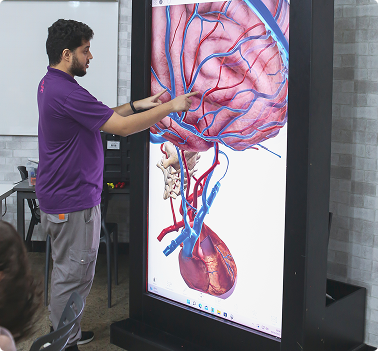
Interdisciplinary projects transform the school experience into an active process of creation, inquiry, and problem-solving.

By connecting Sciences, Mathematics, Languages, Arts, and Technology, the program expands student agency and makes learning more applicable to the real world. The teacher acts as a mediator, while students develop cognitive and socio-emotional competencies essential for contemporary contexts.

Interdisciplinarity in Practice

Student autonomy and leadership

Critical thinking, creativity, and collaboration

Spaces, Resources, and Continuous Teacher Development

Scroll to Top

